Last updated: 28 April 2026


Last updated: 28 April 2026
Transparency and access to building data are critical to upscale building renovation in order to achieve a climate neutral building stock. But that data is spread across different parties.
It was up to us to develop a proof of concept that demonstrates the potential of a Data Mesh approach to address these fragmented data ecosystems.
A self-service Data Mesh platform with decentralised ownership. This means that no central data team is required, and the platform makes it as easy as possible to create new data products.
An ecosystem that enables seamless data sharing and reuse between building logbooks and associated stakeholders, such as policy makers, researchers, and energy efficiency organizations.

This European project focuses on how Digital Buildings Logbooks can accelerate energy-efficient renovations. How can such a digital logbook bring together data and make it comprehensible? And how can we then use that data to make the right choices for our building stock?
Improving a building’s energy efficiency involves making decisions. And to get those decisions right, you need data: heat demand, roof orientation, electricity consumption, etc.
But building-related data sources are often fragmented across various organizations, including government agencies, utility providers, and construction companies.
In the sector of building logbooks, there is a fragmented network of potential existing and new 'building-related' data sources. The extremely limited availability of information, combined with a lack of a common repository of data through a shared platform, directly leads to additional costs and inefficiencies in designing, constructing, operating, and financing buildings.
This is making it difficult for teams to share and reuse data effectively.

The Building Logbooks developed to date rely on point-to-point integrations towards individual data sources to collect data. It is then up to a central team to organise the data and make it available for the many data use cases and data sources. Moreover, each building logbook initiative in Europe has this same challenge which would result in multiple such teams.
“In an environment with so many different stakeholders, this way of working quickly reaches its limits and is not scalable. That one central team becomes the bottleneck”, says Tom De Wolf, Innovation Lead and Data Mesh Expert at ACA Group.
Enforcing a common data interface protocol on all building logbooks or source systems is a common data exchange strategy. Research proved that it is not advisable due to the diverse nature of the current landscape, the effort it would take for each data owner, and the optimal protocol also depends on how the data is to be reused and consumed. It is better to enable stakeholders with a method of data exchange supporting multiple protocols and lowering their individual effort and complexity to do so.
"This calls for an open data platform through which data can be discovered, exchanged and integrated. For this particular project, Data Mesh proved to be the best possible choice.”
What are the four major advantages of Data Mesh for this European project?
The Data Mesh concept can bring diverse benefits to the DBL ecosystem. By providing a common data environment where the latest data is accessible, a Data Mesh for the DBL industry can enable more effective interactions between DBL stakeholders, which usually act in different domains, operate with different IT structures, and have different access rights.


The Data Mesh concept can bring diverse benefits to the DBL ecosystem. By providing a common data environment where the latest data is accessible, a Data Mesh for the DBL industry can enable more effective interactions between DBL stakeholders, which usually act in different domains, operate with different IT structures, and have different access rights.


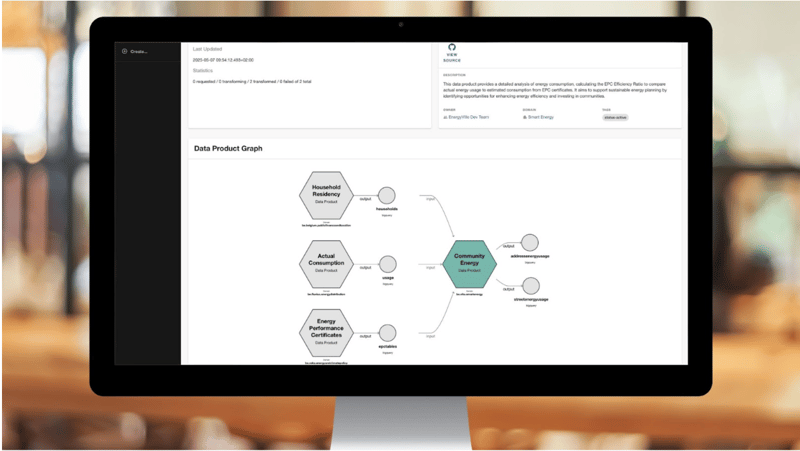
We developed a Data Mesh platform proof of concept and demo on how data exchange and sharing can be facilitated in a new and innovative way.
We focused on building a self-service data platform as the key enabler, empowering data producers to create Data Products and take ownership of their data in a decentralized manner.
Tom De Wolf: “Data Mesh puts the ownership as close as possible with the experts of that data. Because they are best placed to manage that data as effectively as possible and make it available in a ready-to-use format. So that the data is available to the rest of the ecosystem.’”
“This makes it easier to share data as a product. Not: here's a data dump, figure it out yourself. But insightful data that others can use as a basis.”

We demonstrated the feasibility and the potential of a Data Mesh platform to enable use cases such as providing actionable insights for policymakers at the European level, and advanced use cases around energy efficiency optimization.
This underscored the potential of Data Mesh as a backbone for collaborative ecosystems in the building sector to share and reuse data.
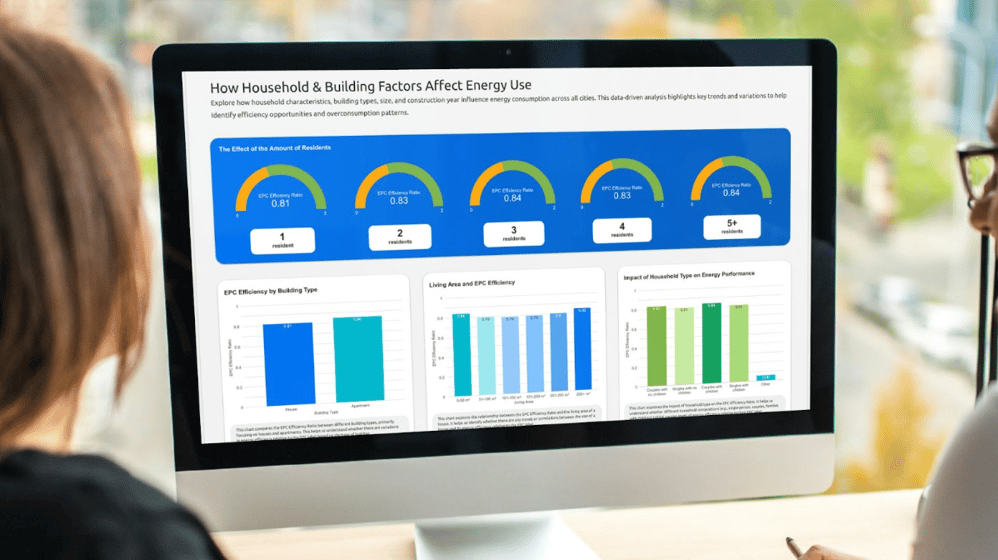
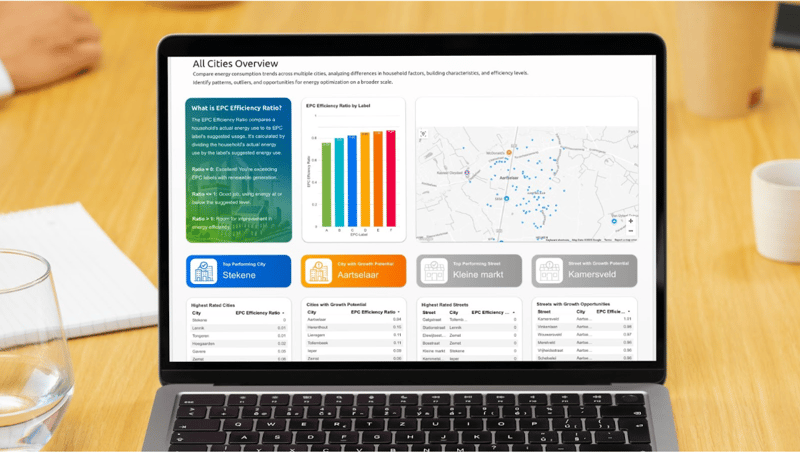
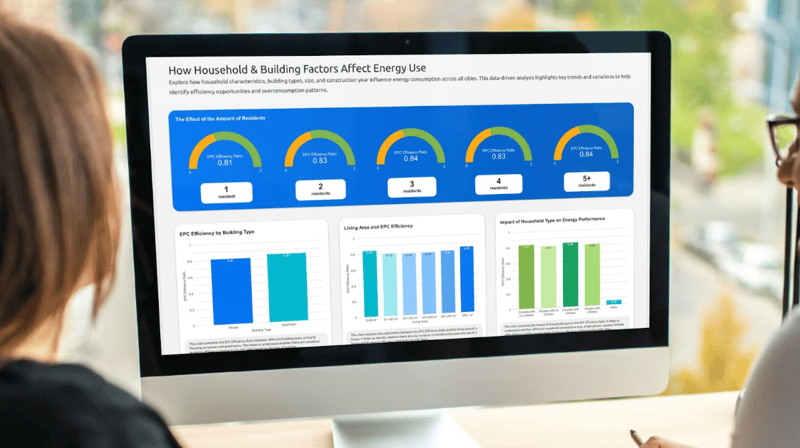
To prove this, we ourselves created a use case that visualises which neighbourhoods in Flanders are most suitable for shared energy grids.

Feel free to contact us and we'll be happy to help!

Feel free to contact us and we'll be happy to help!

Feel free to contact us and we'll be happy to help!

Feel free to contact us and we'll be happy to help!

A tremor in the Force. The last time I felt it was in the presence of my old master. Don't act so surprised, Your Highness. A tremor in the Force. A tremor in the Force. A tremor in the Force.
Renson, a manufacturer in the outdoor living and climate control sector, needed a centralized solution to manage patio covers, shading, lighting, heating, and air quality systems across diverse hardware and networks. ACA Group developed integrated control applications that ensured reliable connectivity and unified system management. During COVID-19, a CO₂ monitoring feature was delivered within two weeks, resulting in faster product innovation and improved indoor and outdoor environmental control.


Stad Hasselt, a local government organization in the public sector, wanted to improve digital access to municipal services through a mobile application but faced low usability and user adoption. ACA Group conducted UX audits and real-world user testing to optimize the app’s design and functionality. This resulted in a user-friendly mobile app with higher user satisfaction and improved accessibility to city services for residents.


Attentia, a provider in the HR and wellbeing services sector, needed to improve its customer journey and online presence but faced challenges with fragmented digital platforms. ACA Group developed a unified, future-proof website by consolidating multiple systems into one platform. This integrated web solution enhances the #OneAttentia experience, enabling customers to easily access services while improving operational efficiency, brand consistency, and digital engagement.


Duvel Moortgat, a brewery in the food and beverage industry, needed a reliable way to detect damaged pallets to ensure safe and efficient beer transport. ACA Group implemented an AI-powered computer vision solution that automatically identifies pallet defects during logistics processes. This automated quality control system reduces manual inspection, lowers operational costs, and improves supply chain efficiency and product quality.


Aqtor!, a provider of orthopedic and mobility aids in the healthcare sector, faced inefficiencies in appointment management that impacted operational productivity and patient experience. ACA Group implemented Planit, a digital planning and scheduling system, to streamline appointment workflows and optimize resource allocation. This solution reduces administrative workload, improves care quality, and increases customer satisfaction by enabling faster, more efficient patient service.


MobilityPlus, a provider in the electric vehicle (EV) charging and sustainable mobility sector, needed to evolve from a standalone mobile app to a scalable digital platform but lacked a unified data and application architecture. ACA Group built an integrated digital ecosystem with a mobile app, web portal, Azure data platform, and AI-driven solutions. This enables data-driven operations, improves scalability, and supports business growth while strengthening MobilityPlus’ market position.


Renson, a manufacturer in the outdoor living and climate control sector, needed a centralized solution to manage patio covers, shading, lighting, heating, and air quality systems across diverse hardware and networks. ACA Group developed integrated control applications that ensured reliable connectivity and unified system management. During COVID-19, a CO₂ monitoring feature was delivered within two weeks, resulting in faster product innovation and improved indoor and outdoor environmental control.


Stad Hasselt, a local government organization in the public sector, wanted to improve digital access to municipal services through a mobile application but faced low usability and user adoption. ACA Group conducted UX audits and real-world user testing to optimize the app’s design and functionality. This resulted in a user-friendly mobile app with higher user satisfaction and improved accessibility to city services for residents.


Attentia, a provider in the HR and wellbeing services sector, needed to improve its customer journey and online presence but faced challenges with fragmented digital platforms. ACA Group developed a unified, future-proof website by consolidating multiple systems into one platform. This integrated web solution enhances the #OneAttentia experience, enabling customers to easily access services while improving operational efficiency, brand consistency, and digital engagement.


Duvel Moortgat, a brewery in the food and beverage industry, needed a reliable way to detect damaged pallets to ensure safe and efficient beer transport. ACA Group implemented an AI-powered computer vision solution that automatically identifies pallet defects during logistics processes. This automated quality control system reduces manual inspection, lowers operational costs, and improves supply chain efficiency and product quality.


Aqtor!, a provider of orthopedic and mobility aids in the healthcare sector, faced inefficiencies in appointment management that impacted operational productivity and patient experience. ACA Group implemented Planit, a digital planning and scheduling system, to streamline appointment workflows and optimize resource allocation. This solution reduces administrative workload, improves care quality, and increases customer satisfaction by enabling faster, more efficient patient service.


MobilityPlus, a provider in the electric vehicle (EV) charging and sustainable mobility sector, needed to evolve from a standalone mobile app to a scalable digital platform but lacked a unified data and application architecture. ACA Group built an integrated digital ecosystem with a mobile app, web portal, Azure data platform, and AI-driven solutions. This enables data-driven operations, improves scalability, and supports business growth while strengthening MobilityPlus’ market position.