.svg?width=174&auto=compress,webp&upscale=true "aca-group (black)")
.svg?width=139&auto=compress,webp&upscale=true "aca-group (black)")


Reading time 8 min
Bregt Coenen

Every year, ACA IT-Solutions organizes an ACA Ship-IT Day. During this day, our team members get the chance to flesh out their innovative ideas from scratch and build up knowledge. Team members organize themselves into teams and work out the idea as much as possible in just one day. In this blog post, we’ll talk about this years’ ACA Ship-IT Day and the projects that came out of it!
With more than 180 passionate team members that focus on innovation and quality as key ingredients, this years’ theme is all about “innovation in just one day”. Because of the coronavirus pandemic, many organizations had to go through a fast digital transition last year. With digital innovation as one of our expertises, we want to help other organizations with these challenges. The goal of this years’ ACA Ship-IT Day was to create innovative applications that can help our customers.
Together with some of our customers, the different Ship-IT teams validated and fleshed out innovative ideas to proof-of-concepts. Let’s dive into them!
ACA always puts the end-user at the center of everything we do. With that in mind, the first team built a customer portal for our clients.
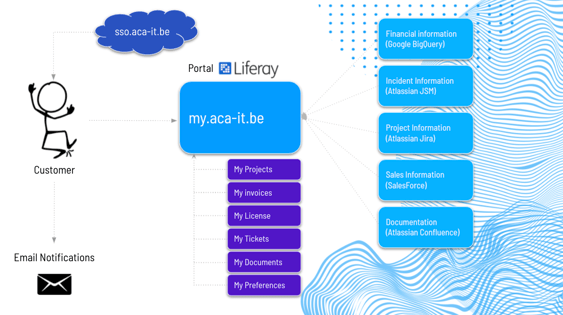
This customer portal is a central place for essential information, where a customer can:
We want to have engaged, satisfied and happy customers. A customized portal is one thing that can help us to achieve this goal. Besides that main goal, working in this customer portal will increase efficiency, reduce unnecessary communication and improve and streamline service and support for our customers.
The portal itself is built in Liferay and integrates with various back-end systems, such as:
“I’m really happy with what we were able to achieve. During the day, I could see firsthand how we’re able to build something innovative in such a short time. I’m really impressed by how skilled my other team members are!”— Dorien Jorissen , Sustainability Expert at ACA Group

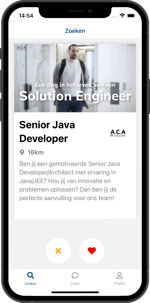
The team members from the mobile team got together to develop a prototype of a mobile application that matches job seekers and employers. Job seekers can swipe left (to like) or right (to dislike) on different job applications. Sounds familiar? We call it “Tinder for job seekers”. 😀
First, job seekers create a profile containing their resume on the app. After that, they’re ready to start swiping through the job applications they’re interested in. These job applications can be filtered by function, location, sector, seniority, and so on. Besides that, job seekers can send (chat)messages to the employer they’re interested in.
Employers can put their company in the picture on the app by creating a company profile. They receive notifications when a job seeker likes them, but they can also see their search results and gather data and resumes on their dashboard. For employers, it’s also possible to send messages to and answer questions from job seekers that liked them.
The mobile application is written in the React Native framework and in the React web language. The final output of that development is a native app on both iOS and Android.
“I loved it! We started the day off with brainstorming to determine our focus and who would do what. During the day, we frequently came together to discuss our progress and prioritize any leftover tasks. We looked at what we’d be able to deliver at the end of the day, one hour at a time. Enough cause for some healthy stress :)”
— Joren Vos , Mobile solution engineer at ACA Group

One of our customers in healthcare was already looking for a solution that automatically recognizes certain objects, such as injuries. After all, daily follow-up of injuries on patients is time-consuming and not always precise. That’s why this third ship-IT team developed a complete AI/AR mobile solution for injury management. With this app, our customer could save time, reduce errors and improve the healing of injuries, since health professionals can focus more on patient care.

The application can automatically detect, register and track injuries by using innovative techniques like Artificial Intelligence (AI) and Augmented Reality (AR). Thanks to guided real-time recognition, caretakers are guided to a perfect injury registration and receive real-time predictions. The app takes live pictures and adds additions through metadata for maximum ease-of-use.
It’s possible to provide additional information in the application, like the mental and physical state of the patient, and predictions based on their database of injuries. Caretakers can access this database to find similar conditions and help their patient more efficiently.
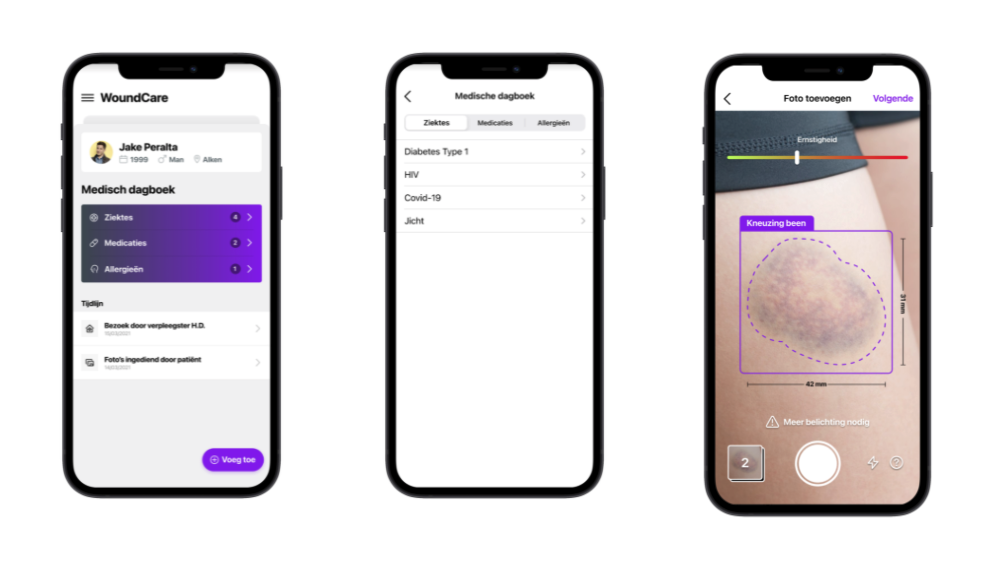
In the application, a personal timeline is integrated to follow the evolution of a certain injury, suggest actions and give tips. The patient can also perform checks themselves through the app. Lastly, the app features a dashboard with a summary of the identified injuries, statistics, to link unrecognized photos manually and view important trends.
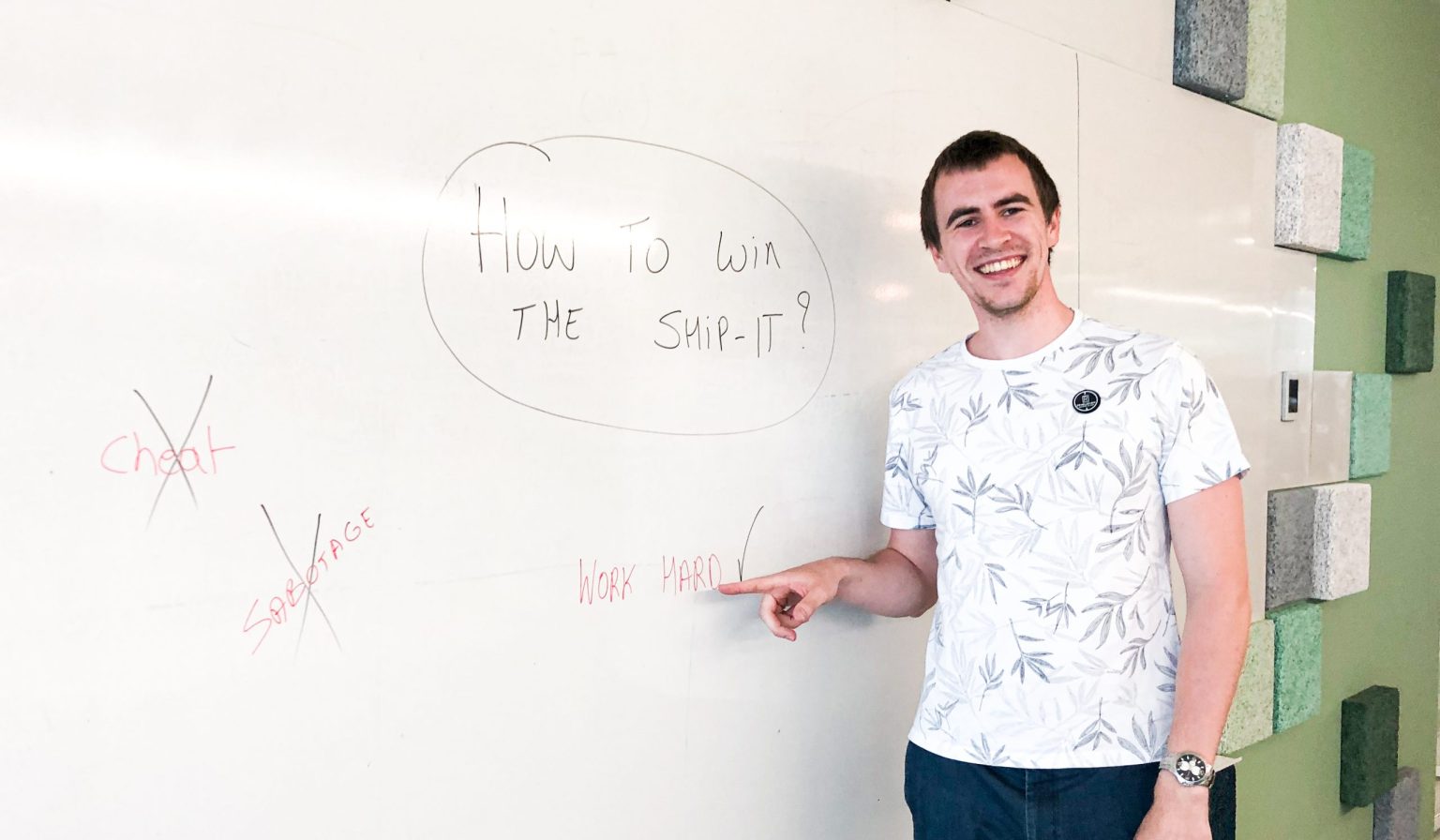
“It’s not easy to build an app to recognize injuries in just 8 hours. We started with the idea that the app wouldn’t be completely fleshed out at the end of the day, but that it’d be more of a prototype. We were able to show what is possible through Google’s machine learning kit on iOS. If we’d had an extra 8 hours, we could have trained our detection system with models to be able to differentiate between bruises and cuts, for example.”
— Stijn Schutyser , UX / UI Designer at ACA Group

Safety in the workplace is crucial. For their Ship-IT project, this team wanted to increase the integration of safety regulations in the workplace and facilitate easy and user-friendly access for all employees in risk profiles.
The team built an Augmented Reality (AR) application for our client IDEWE that offers safety instructions, regulations and information for a specific room and/or machine. This way, the team strongly reduces the chance of an accident happening.
This application is flexible because there is no information overload and it activates automatically by proximity touchpoints. The application can also be customized to the user profile, which means they will get notifications based on their profile or function.
While building this application, our team used two tools. The first one is Google ARcore, a free application to create AR applications. They used Google ARCore to recognize a certain object (in this case a QR code) and then map other things in the world relative to the location of this QR code and display them in AR.
“For my bachelor’s thesis, I’ve experimented a lot with AR in an industry 4.0 context. Because of my prior experience, this project was truly made for me! I had a blast working with the team and thinking outside of the box. :)”
— Louis Hendrickx , Java solution engineer at ACA Group


There are a number of architectural trends in the cloud-native space. In this Ship-IT project, a team wanted to explore the possibilities of service mesh for development and deployment for our client Valipac. A service mesh, like the open-source project Istio, is a way to control how different parts of an application share data with one another. This way, we have a better understanding of how applications behave and handle requests.
The activation and tuning of out-of-the-box possibilities for Valipac mainly gives us insights into how applications work together via request-response mechanisms. This is insufficient to gain good insights into applications that work together asynchronously with events (i.e. event-driven architecture). Our team investigated how we can extend service mesh to also provide insight into these interactions on a topology graph. The team wrote a plug-in for the Istio service mesh based on WebAssembly. This plug-in generates the metric behind the topology graph with the source of an event’s producer and the destination of an event’s consumer.
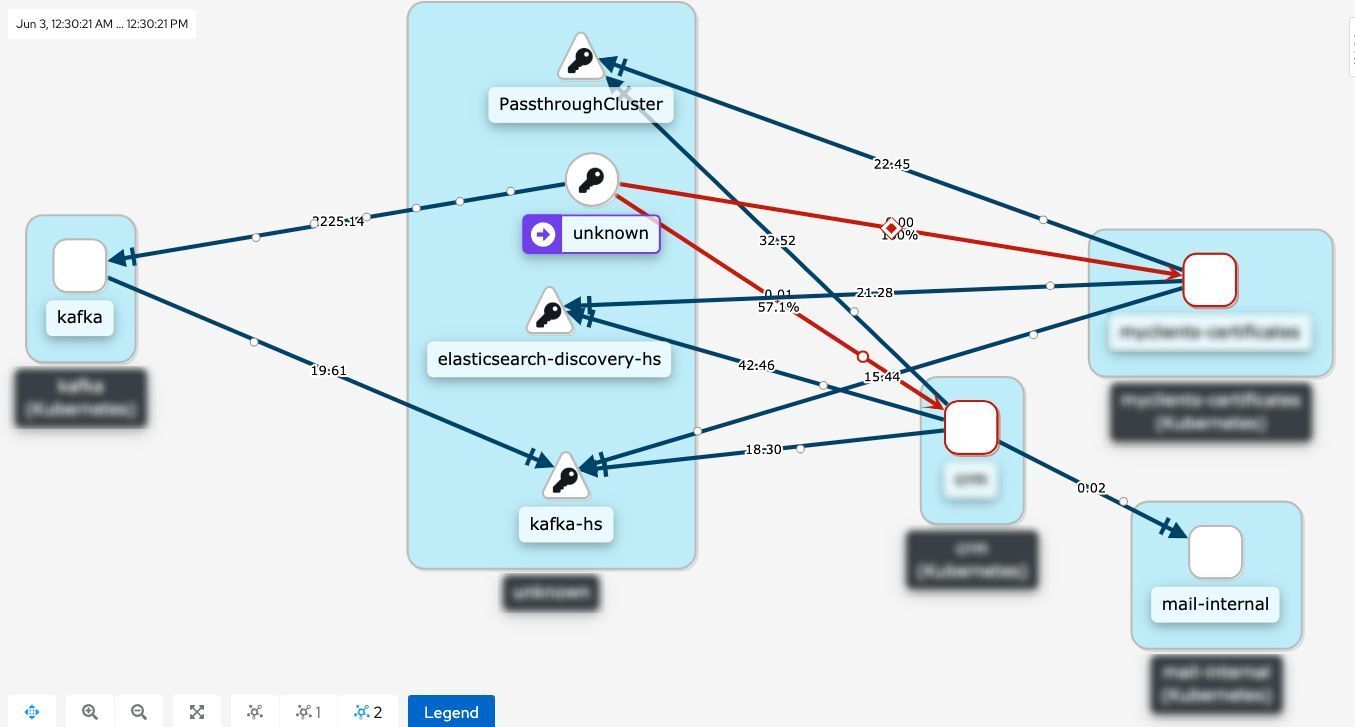
A lesson our team learned is that writing such a plug-in with WebAssembly is not that easy. After all, they didn’t have a lot of experience with the language since it’s relatively new technology. However, the team concluded that they can also build the topology graph from the application code itself in the same way. This way, we also see through the topology graph which applications work together via events, which leads to an increased observability of the application landscape for event-driven architectures such as Valipac.
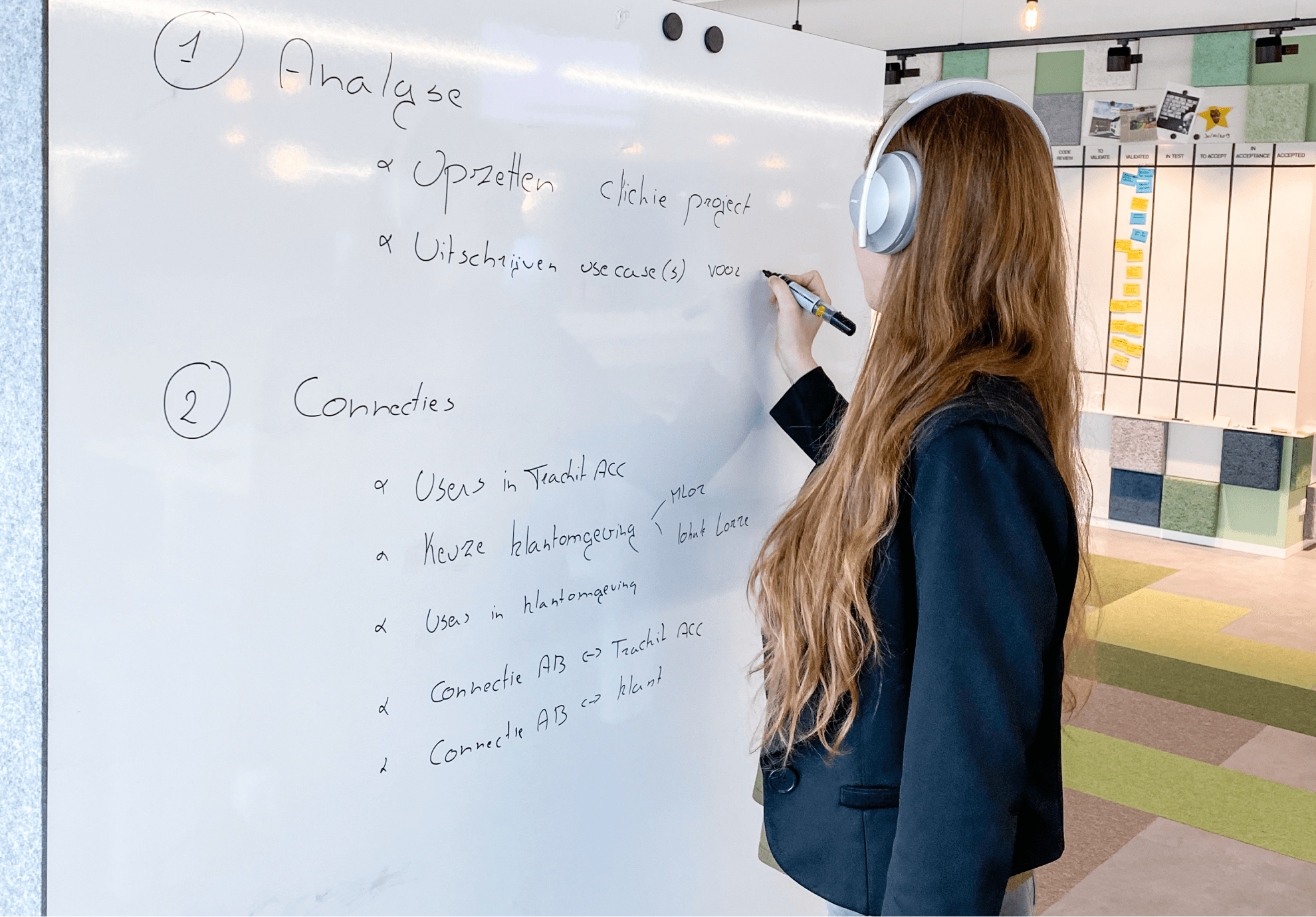
For our Atlassian experts, providing a great service for our customers is their top priority. They want to bring the ACA support closer to our client MLOZ. That’s why they wanted to integrate the applications that we run at MLOZ with our own track-it system. This way, our support team receives all relevant information immediately when the ticket is created by the client.
Our team used Autoblocks for the integration in this project. Autoblocks is an integration platform built by our partner Adaptavist that integrates with Atlassian tools.
The customer of this Ship-IT project provides transport to pharmacies and will expand this to patients as well in the future. They currently do not have much in place to track and follow up on orders. Our 8th Ship-IT stepped in and wanted to help them by building a user-friendly platform to track orders, receive end-user feedback and give the users the possibility to re-order certain items.
By creating such an order tracking system, the team offers benefits to different actors of our client. Pharmacies will have a better overview of the status of the orders, which they can relay to their end customers. Patients on their end can place, follow and track orders in an easy and user-friendly way.

Our client is one of the most important producers of frozen potato products for private labels in the world. Their facilities house more than 1000 cameras that monitor the production lines. Currently, the video streams are monitored by operators. This causes that the operators have to supervise a vast amount of cameras. This means that incidents are not always detected immediately. When a fire breaks out, it may have a large impact on both safety and the production capacity.
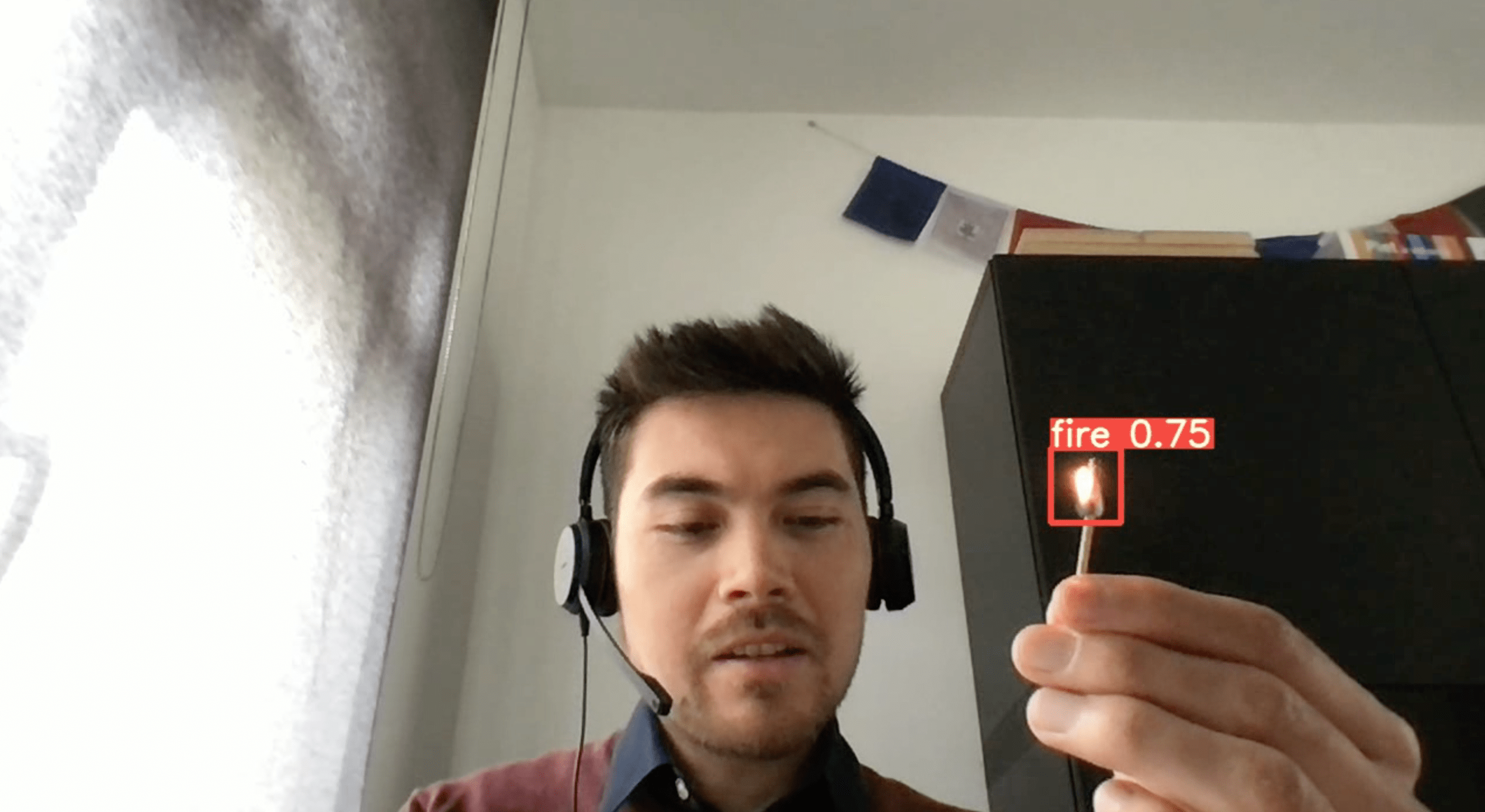
For this reason, this Ship-IT project focused on developing a real-time notification application that leverages machine learning and cloud infrastructure to detect fire from camera feeds. The task of identifying and locating a flame in video frames is an object detection problem. The You Only Look Once (YOLO) machine learning model is a state-of-the-art algorithm for real-time object detection. In this project, the team used a recent implementation of YOLO, YOLOV5, developed by Ultralytics. This single-stage object detector is based on a neural network architecture that extracts – during training – a set of informative features from input images, i.e., indoor and outdoor images with fire. Later, the trained model is used to identify the presence of fire for each frame. If a flame is detected, the model draws a bounding box around the flame and assigns a confidence score to that prediction.
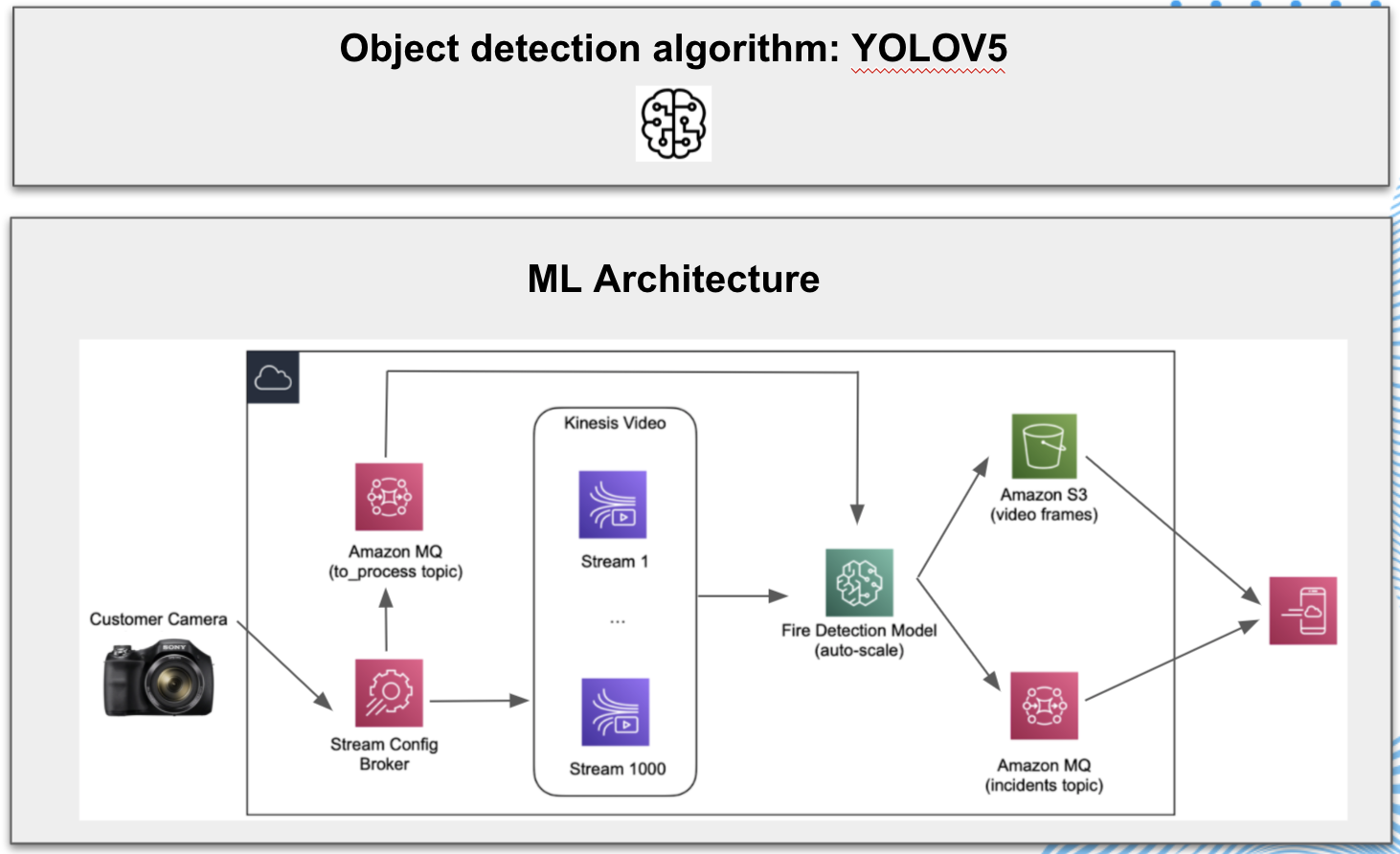
On the operational side, our solution starts from the subscription of a customer camera feed to a broker that initializes a Kinesis video stream, and also sends notifications to a processing queue provisioned with Amazon MQ (or similar). The queue is populated with individual video frame identifiers that are processed in parallel by calling the pretrained object detection model, i.e YOLOV5, deployed with AWS SageMaker. Once a flame is detected in any frame, a downstream event is then triggered to notify an application/notification engine. This architecture allows massive automation and scaling. In particular, it can scale horizontally by augmenting the number of parallel threads, as well as vertically by increasing the number of SageMaker instances through the auto-scale capability of SageMaker.
In order to speed up the notification in case of a fire, we made it possible to build a mobile application that consists of a real-time notification, a picture of the location of the fire and a timestamp.
At the end of the day, the different teams had to create a proof-of-concept to demo and give a presentation about. Every team pitched their project to all the other teams, who then voted for their favorite project based on the theme.
Project 1, My ACA, was able to take home this year’s trophy! 🏆 Within ACA, we have been thinking about offering our customers an optimal customer experience for some time now. The ACA Ship-IT Day was the perfect opportunity to create such a portal on the basis of new tools. Because of the innovative factor and the added value for our clients, most of our employees voted for this project. The next steps are to test the proposal with a number of pilot customers and make an estimation for the further elaboration of MVP1, which will then be submitted to our management team. After all these steps, we start looking for a sponsor.
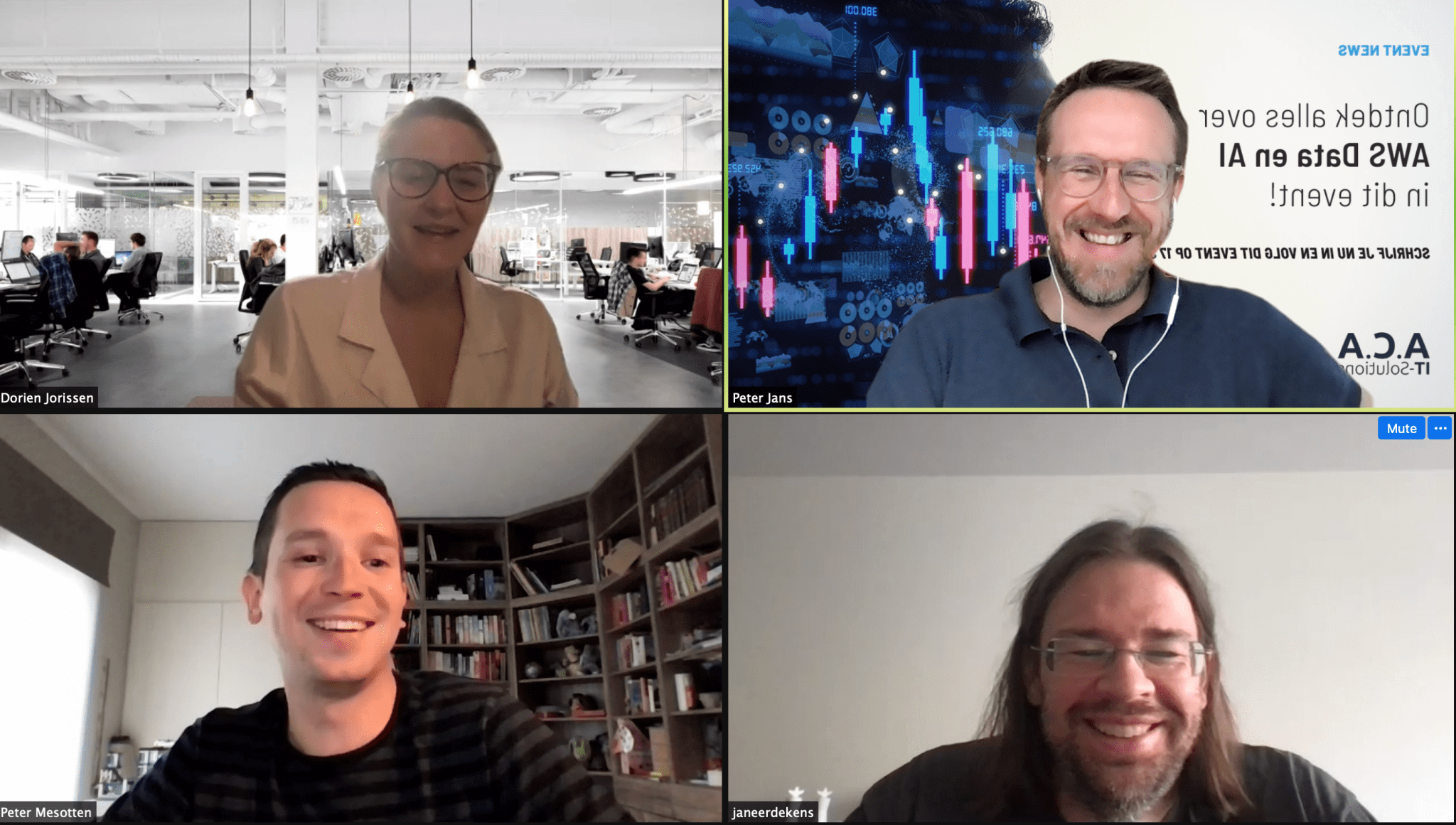
Congratulations to the entire team of experts and all the other teams that contributed to this great Ship-IT Day. Looking forward to next year!

Has your company already settled into the seats of first class, or have you not yet found your place on the AI train? Our AI expert Alexander Frimout explains which processes are ideally suited for your first AI business case. And why some companies
Read more

Our Business expert in Energy Utilities Tom Claus headed to Energy Mission, and came back with some new insights… and a wake-up call for companies and (government) agencies.
Read more
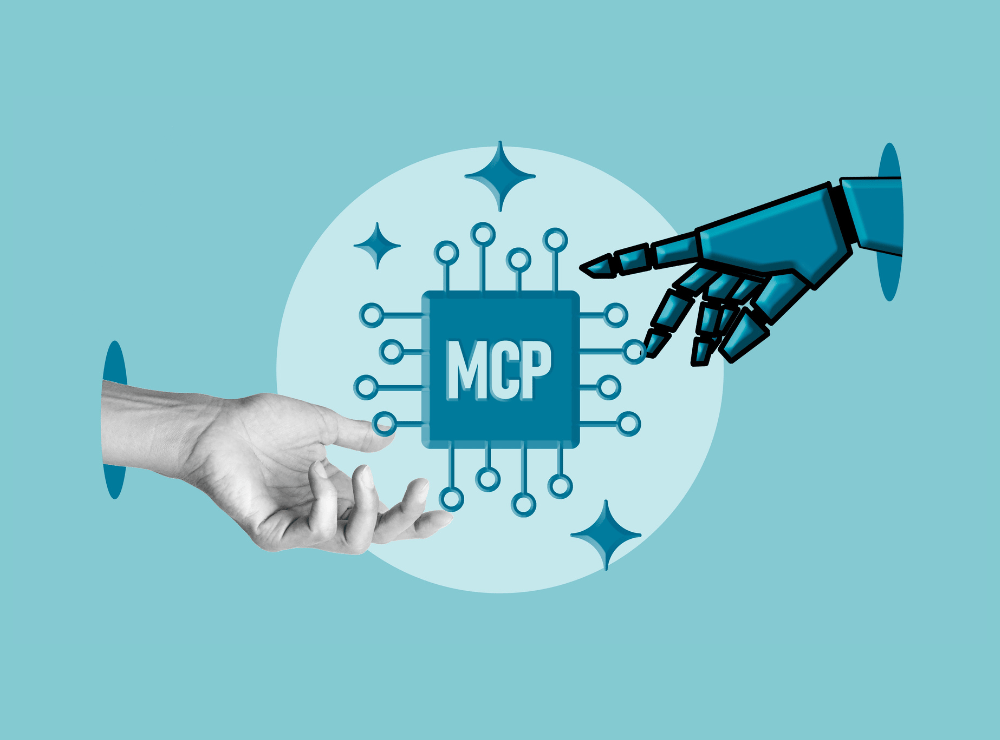

For every external tool you want to connect to your AI system, you have to build a custom integration. This comes with two major downsides. One: it takes up a lot of your time. Two: you can not scale this way of working. Luckily, the Model Context Pr
Read moreGet in touch with our experts today. They are happy to help!

Get in touch with our experts today. They are happy to help!
Get in touch with our experts today. They are happy to help!
Get in touch with our experts today. They are happy to help!