.svg?width=174&auto=compress,webp&upscale=true "aca-group (black)")
.svg?width=139&auto=compress,webp&upscale=true "aca-group (black)")


Reading time 6 min
Stijn Schutyser
The yearly inspiring Azure conference CloudBrew organized by the Azure User Group took place on December 12th and 13th, 2024. The best speakers from all over Europe were invited to share their experiences and knowledge of the latest developments in Azure.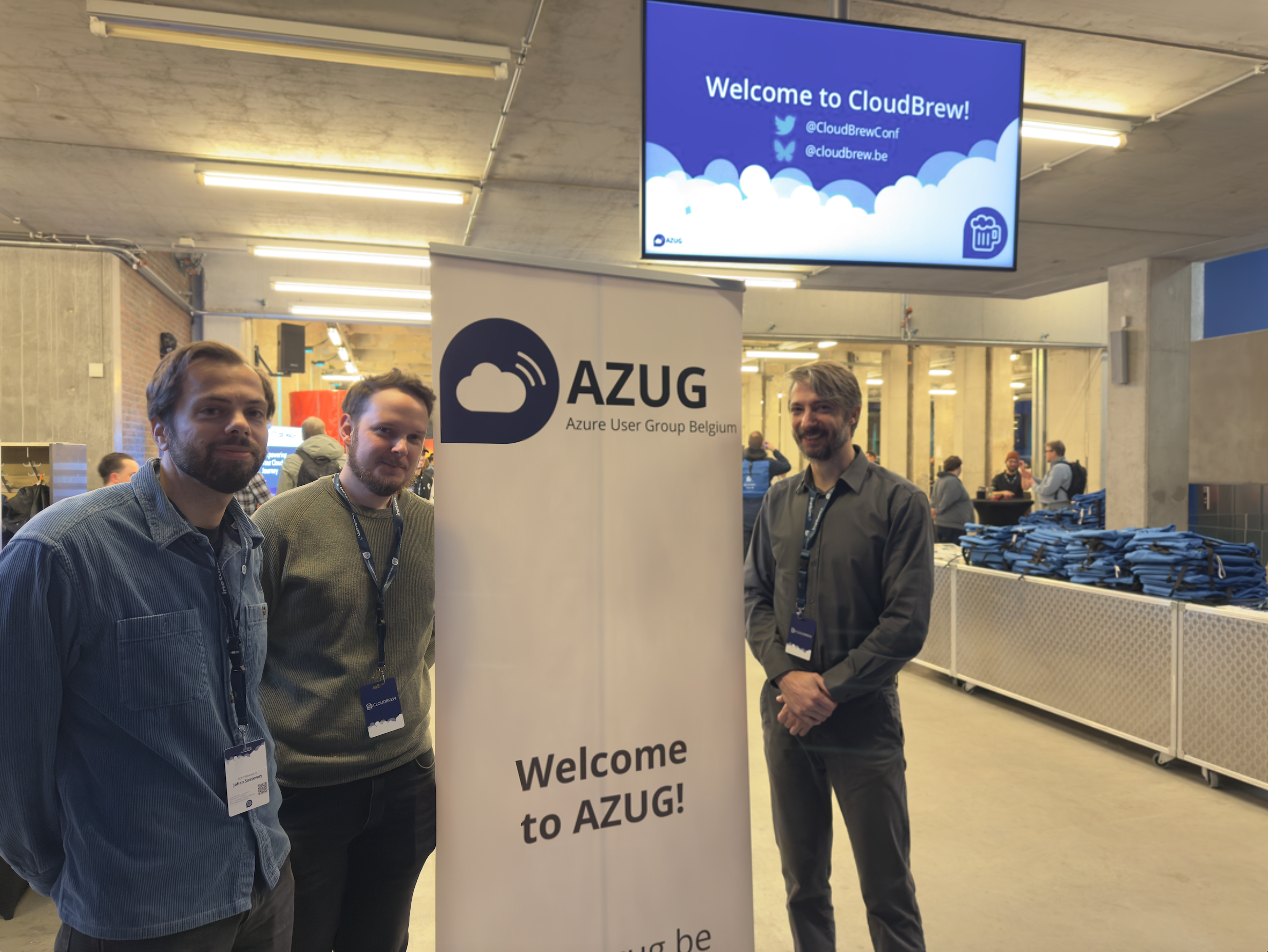
ACA Group is one of the partners of CloudBrew and the Azure User Group in Belgium. This allowed us not only to participate but have selected customers join us into the ever evolving world of Azure at the event.
With two action packed days of events, we want to highlight the topics which touched and inspired us.
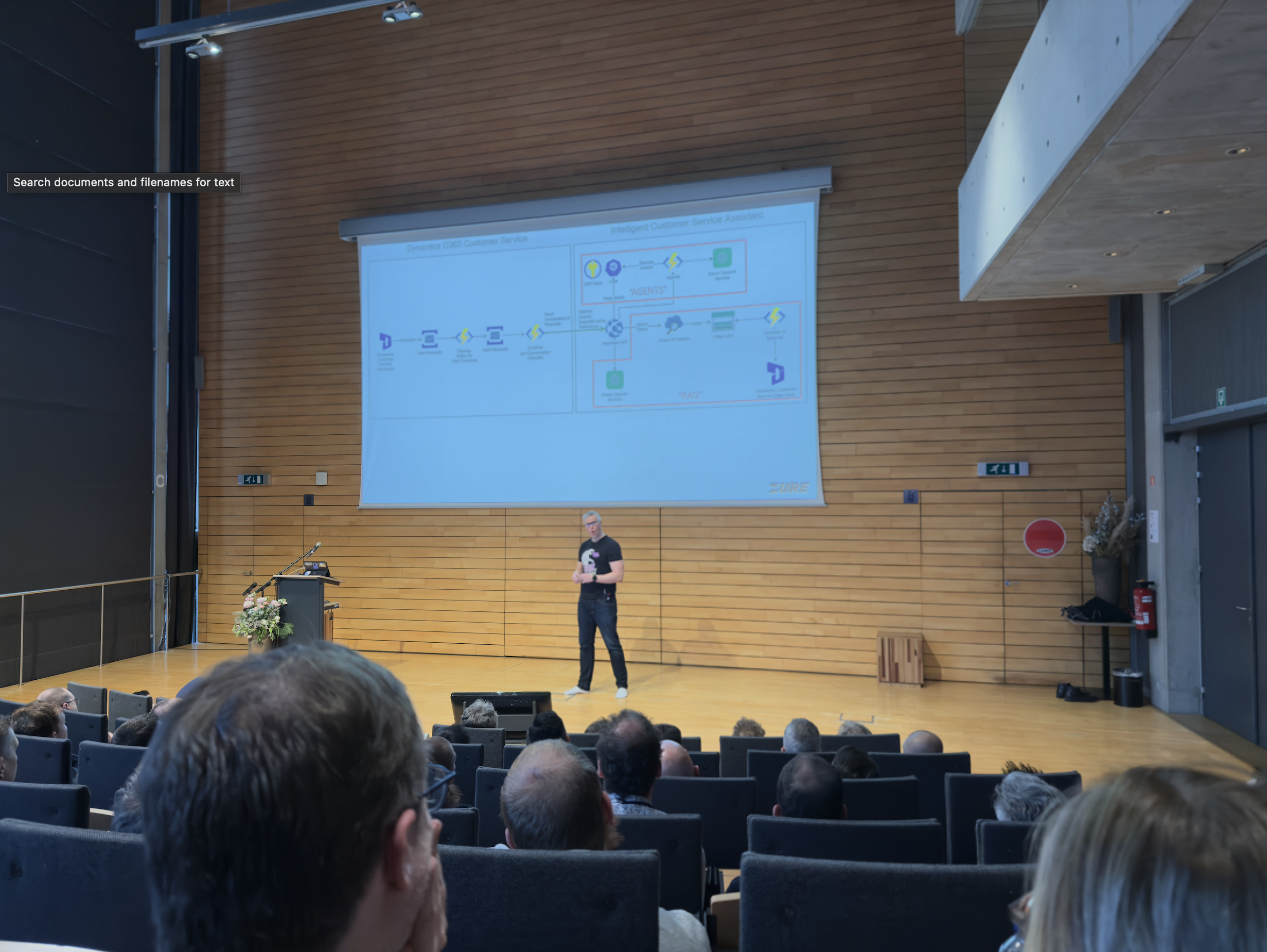
The opening keynote was delivered by no other than Sakari Nahi, the CEO of Zure. He talked about the advances in AI and specifically how it will impact the hard working engineers and architects in the public cloud. There’s no denying that AI will impact how we use and work with Azure. This may make us worried on different levels, some may worry that we will be replaced by AI, while others will have privacy concerns. Wherever you are on this scale, the AI revolution is positive for everyone. We have to see ourselves as operators of AI, not as replacements.
Rik Hepworth and his magnificent gray hair was present to explain how it’s always DNS. It’s always DNS in the sense that no matter what you decide to deploy, DNS has to be taken into consideration. Here we learned the importance of centralizing DNS with a HUB and SPOKE configuration. The Azure Private DNS Resolver is taking over as the go-to solution for DNS Conditional Forwarding. By centralizing this in the HUB, it’s possible to scale the environment into as many virtual networks and subscriptions as required. Avoid setting up Private DNS zones in individual SPOKE subscriptions as this is a recipe for management disaster as the environment grows.
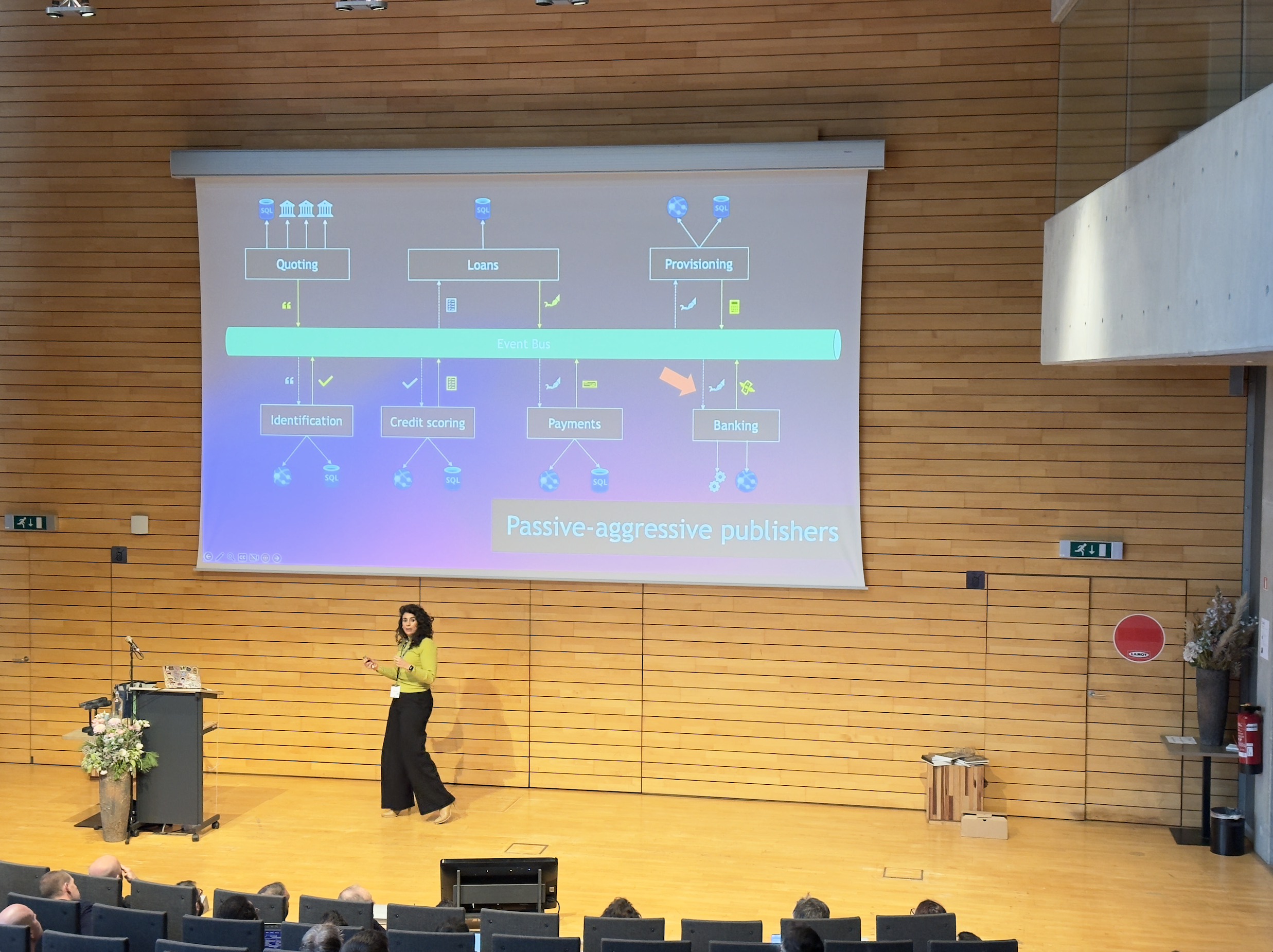
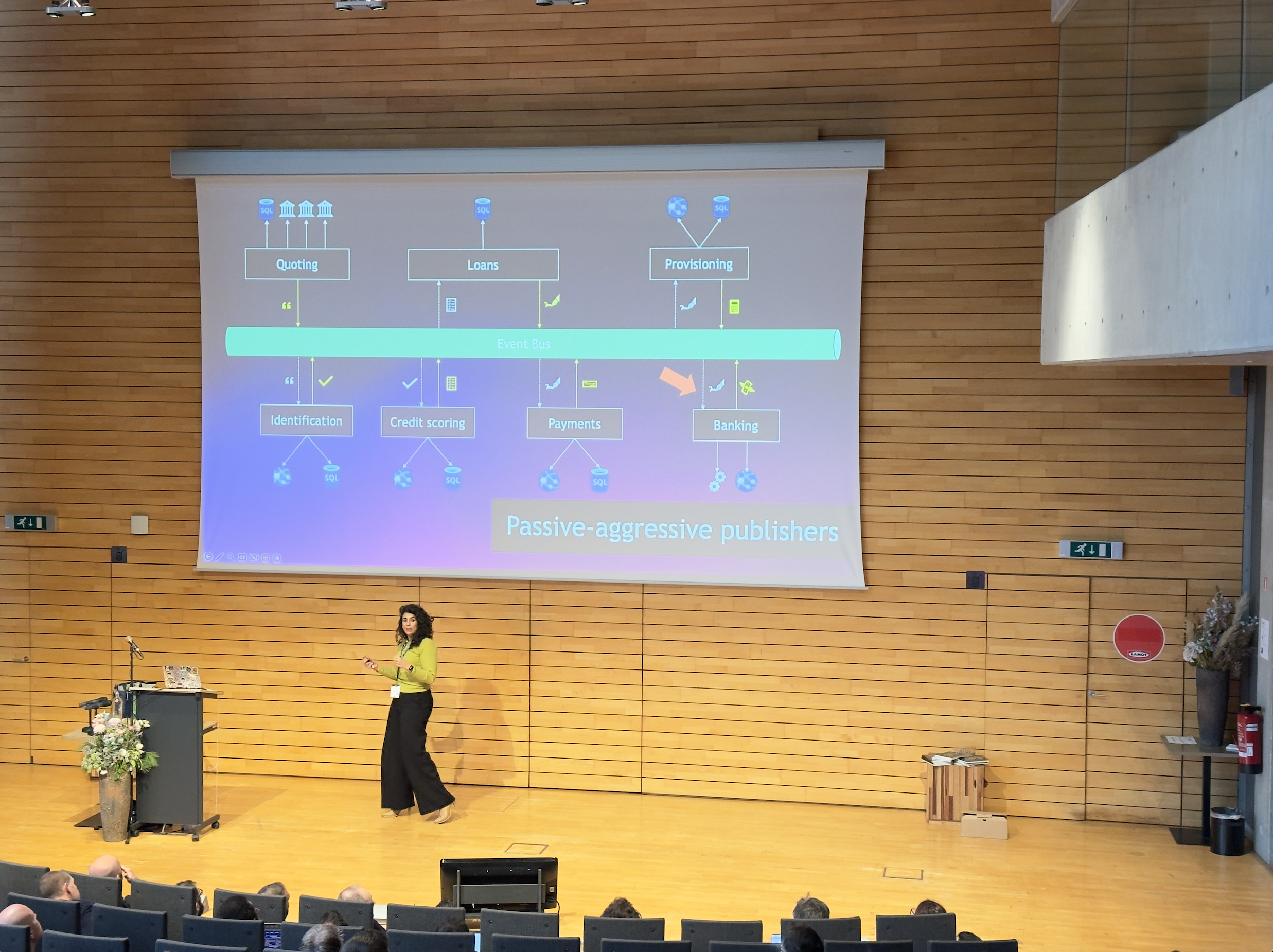
As our daily work rarely involves software architecture, we weren’t sure what to expect from this talk. However, we were pleasantly surprised as Laila Bougria delivered one of the most captivating sessions on building microservice-based application architectures.
Orchestration uses a coordination and management system between the different software components. Choreography on the other hand is decentralized offering and in some cases provides easier maintenance. There is no card to trump them all, it all depends on your situation. After this awesome session from Laila, we got more interested in the topic. You can find more about her work here.
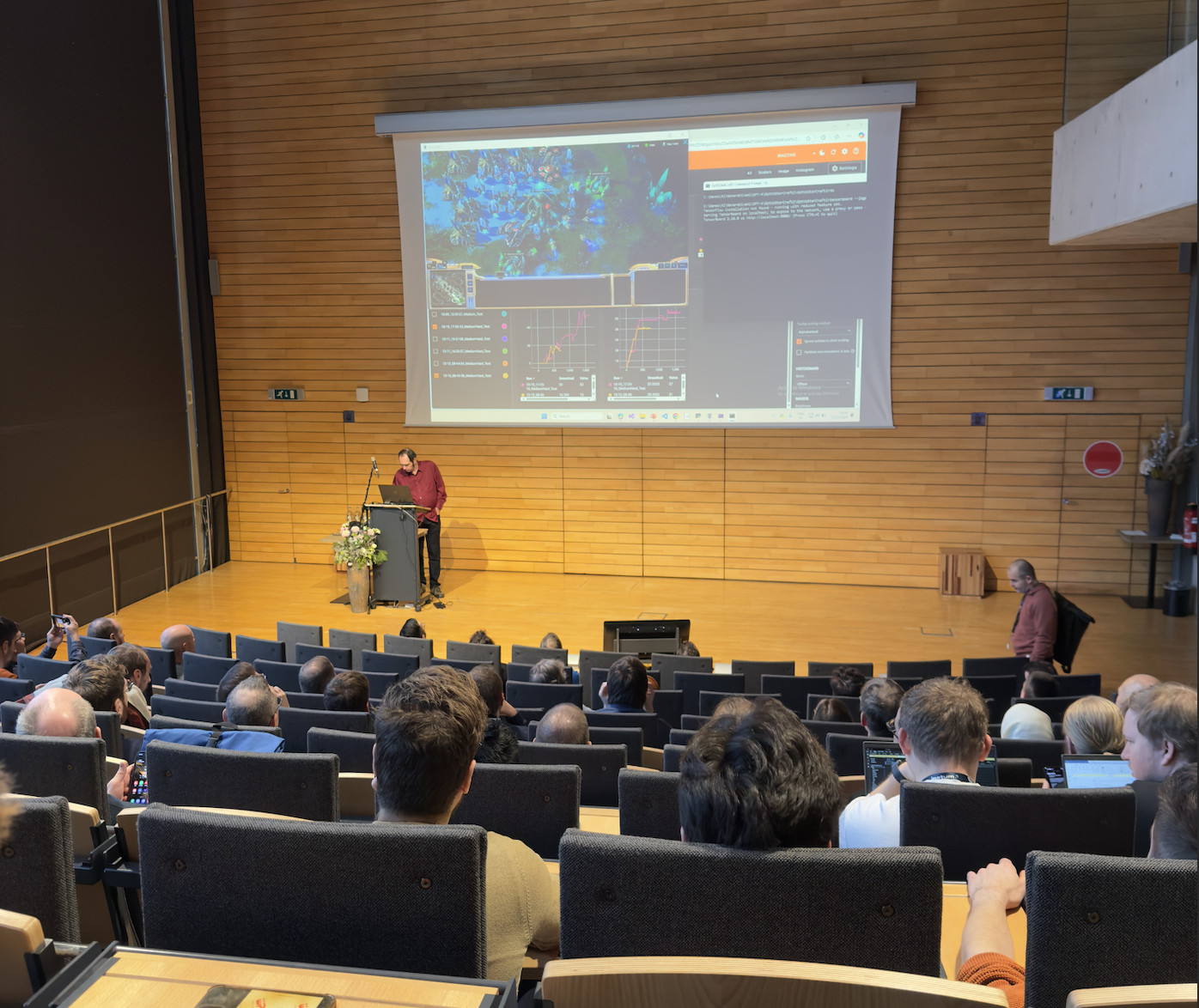
AI is everywhere and CloudBrew is not an exception. This session from Alan Smith provided a practical example on how you can integrate GPT-4 into an existing system, which in this case was Starcraft II. Starcraft II is a strategy game released in 2010, where there is a wealth of information on the Internet on how to beat your opponent.
All of this information has been picked up by GPT-4 and if you would ask it, based on the state of the game, such as what the opponent is doing, it can devise a strategy in text format to counter this. This was a live demonstration of how the screen output of Starcraft II was fed to GPT-4. GPT-4 returned a set of instructions on what the next actions would be to counter and beat your opponent. These were translated to in game activities and we could watch in awe how GPT-4 was beating the opponent. Granted, in this scenario GPT-4 was playing against the computer, which is also considered a type of AI. AI beating AI feels like we are coming full circle, in a surprisingly positive kind of way 🙂
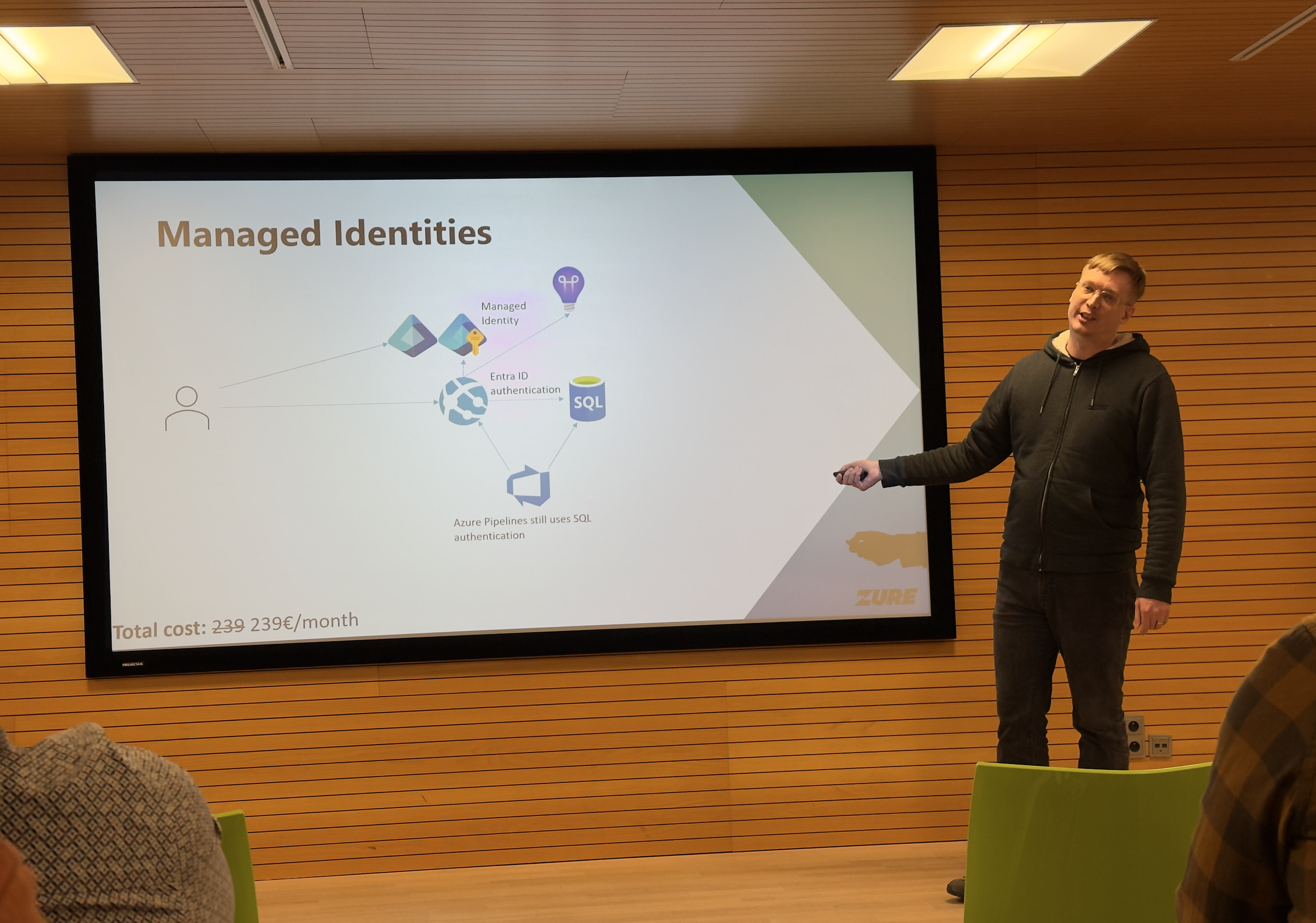
Joonas Westlin gave a lecture on Azure security for PaaS solutions, and he delivered it with a good dose of humor and relatable real-world examples.
We started with the basics: affordable, standard solutions like Private Endpoints and Network Security Groups. Nice and simple, and budget-friendly. But the further you move the security slider up, the more serious it gets. Think WAF (Web Application Firewall) and Application Gateway, which lock down your environment completely — but can also stretch your budget significantly.
Joonas presented his story in a way that made you laugh regularly because it was so relatable. His anecdotes struck exactly the right chord, while also providing useful insights. Especially on how to smartly balance security and costs, without feeling like you're running a fortress.
Although CloudBrew has only just passed, we can’t help but look back with a smile. The conference, the speaker lineup, and their engaging topics were nothing short of exceptional. The knowledge and insights we gained in just two days would have taken months to acquire elsewhere.
We’re already looking forward to CloudBrew 2025 and hope to see you there as well!




CloudBrew has always been a highlight on our calendar, but the 2025 edition felt different. Perhaps it was the timing. Just the month prior, November 2025, the Azure Belgium Central region finally opened its doors. ACA has always operated from the he
Read more

Better uptime, lower costs, and avoiding vendor lock-in. These are three of the reasons why our customers opt for a multicloud strategy. Our Cloud Project Manager Roel Van Steenberghe explains what such a strategy entails and what the advantages of G
Read more


In the complex world of modern software development, companies are faced with the challenge of seamlessly integrating diverse applications developed and managed by different teams. An invaluable asset in overcoming this challenge is the Service Mesh.
Read moreGet in touch with our experts today. They are happy to help!

Get in touch with our experts today. They are happy to help!
Get in touch with our experts today. They are happy to help!
Get in touch with our experts today. They are happy to help!